Uxbridge, MA · Worcester County
Basement Water Damage Restoration in Uxbridge, MAEmergency Basement Flood Cleanup & Basement Drying Services
Basement Water Damage Restoration in Uxbridge includes emergency basement flood cleanup, basement sewer backup cleanup and basement wall drying.
Answered 24/7
Basement Water Damage Restoration for Uxbridge Homes
Basements collect water from every direction: rain seeping through walls, groundwater pushing up through the slab, sewage backing up through floor drains and pipes bursting overhead. In an Uxbridge home with a basement or below-grade room, any of these can leave inches of water on the floor.
Homes in Uxbridge and nearby Northbridge, Mendon and Douglas with basements deal with seepage, plumbing leaks and sewer backups. Help with basement water damage restoration covers pumping, removal of wet materials and drying of walls and concrete.
Basement Water Damage Restoration Solutions Available in Uxbridge
Emergency Basement Flood Cleanup
A flooded basement can damage furnaces, water heaters and stored items quickly. Fast pumping limits how much is lost.
Basement Drying Services
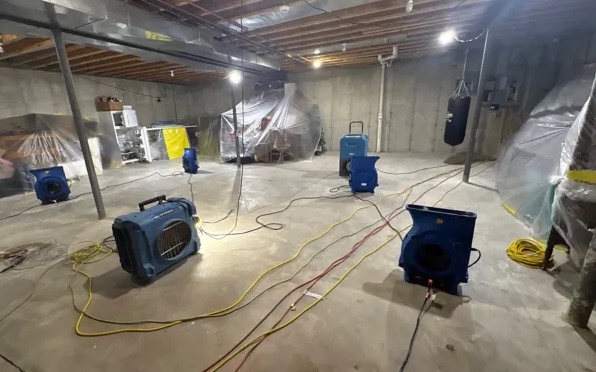
Air movers and dehumidifiers are placed to dry walls, framing and the slab. Below-grade rooms dry slowly, so readings are taken daily.
Basement Wall Drying
Concrete and block walls are dried with directed airflow and dehumidifiers, and checked with meters until readings drop.
Basement Mold Prevention
Fast extraction and drying are the main ways to limit microbial growth in a basement. Surfaces that stayed wet can be treated once dry.
Basement Dehumidification
Large dehumidifiers pull moisture from the basement air so walls, framing and the slab can release their water.
Warning Signs You Need Basement Water Damage Restoration
Wet or Stained Basement Walls
Dark, wet patches or tide lines on basement walls show where water seeped in or wicked up.
Efflorescence on Concrete Walls
White, chalky deposits on concrete walls mean water is moving through the concrete and leaving minerals behind.
Standing Water in the Basement
Any standing water on the basement floor needs pumping right away, before it soaks walls and framing.
Sewage Odors or Backups
Sewage smells or water coming up through a floor drain mean the sewer line is backing up.
How Basement Water Damage Restoration Works in Uxbridge
Step 1: Initial Assessment and Water Removal
The source and type of water are identified, and standing water is removed right away.
Step 2: Focused Drying of Materials
Walls, framing and the slab are dried with directed airflow, with wet insulation removed.
Step 3: Air Quality Management
Air scrubbers filter dust and odors from removal work while drying continues.
Step 4: Documentation for Restoration
Photos, readings and a list of removed materials are prepared for insurance and rebuilding.
What Causes Basement Water Damage Restoration in Uxbridge
High Water Table and Hydrostatic Pressure
A high water table pushes groundwater up through the slab and into the joints between wall and floor.
Sewer Line Backups
A blocked or overloaded sewer line pushes wastewater up through basement drains and toilets.
Faulty Basement Waterproofing
Old or failed waterproofing on foundation walls lets water through during wet weather.
Foundation Cracks and Leaks
Cracks in foundation walls let groundwater and melting snow seep into the basement.
Basement Water Damage Restoration for All Properties in Uxbridge
Residential Basement Water Damage Restoration
Finished basements used as living space need carpet, pad and lower drywall checked carefully. Soaked materials are removed so the walls and slab can dry.
Commercial Basement Water Damage Restoration
Businesses with below-grade storage need inventory moved out of the water quickly. Wet stock is separated and documented for insurance.
DIY vs. Professional Basement Water Damage Restoration in Uxbridge
If a small leak left a puddle on bare concrete, a wet vac and a dehumidifier may be enough. Call local water removal pros if water reached drywall, carpet or framing, or if it came from a sewer drain.
Factors Affecting Basement Water Damage Restoration Cost in Uxbridge
A basement pumped and dried right away in Uxbridge usually costs less than one left wet for days, when more drywall and flooring are lost.
Affected Square Footage
Larger basements need more extraction, more drying equipment and more days of drying time.
Material Saturation
Finished basements with carpet, drywall and insulation take more removal work than bare concrete.
Water Category
Clean water costs less to handle than sewage, which needs protective gear, removal and disinfection.
Does Insurance Cover Basement Water Damage Restoration?
Coverage for groundwater seepage and backups varies widely between policies. Ask your adjuster whether your policy includes it before work begins.
Why Choose Local Pros for Basement Water Damage Restoration in Uxbridge
Mold Prevention Focus
Fast drying is the main way to limit microbial growth in a below-grade space.
Industrial-Grade Equipment
Pumps, extractors and large dehumidifiers remove water much faster than household wet vacs and fans.
Containment Strategies
Plastic sheeting keeps contaminated areas separate from clean parts of the house.
Uxbridge Emergency Basement Water Damage Restoration Response
Storm night, weekend or holiday, local water removal pros handle flooded basements in Uxbridge. Call (508) 219-6294 to get the pumps running and the water out.
Call Now (508) 219-6294Local Basement Water Damage Restoration Coverage: Uxbridge and Beyond
Help with basement water damage restoration is also available in communities near Uxbridge, including Northbridge, Mendon and Douglas, for flooded basements and sewer backups.
- Basement Water Damage Restoration in Northbridge
- Basement Water Damage Restoration in Mendon
- Basement Water Damage Restoration in Douglas
- Basement Water Damage Restoration in Hopedale
- Basement Water Damage Restoration in Blackstone
- Basement Water Damage Restoration in Upton
- Basement Water Damage Restoration in Sutton
- Basement Water Damage Restoration in Milford
- Emergency Damage Restoration in 01569
- Storm Damage Restoration in 01569
- Water Damage Restoration in 01569
- Water Extraction Service in 01569
- Water Leak Detection in 01569
- Water Removal Service in 01569
Frequently Asked Questions About Basement Water Damage Restoration
What is the purpose of basement wall drying?
To remove water from drywall, insulation, framing and concrete so the walls can be repaired without trapping moisture.
Does basement mold prevention need special steps after flooding?
Fast drying is the main step. Wood and concrete that stayed wet can be treated with an antimicrobial once dry.
What causes the most common below-grade leaks in homes?
Sump pump failures, foundation cracks, clogged drain tile, sewer backups and burst pipes in the basement ceiling.
What are signs of hidden moisture after below-grade water extraction?
Musty smells, tide lines on walls, damp carpet edges and moisture readings that stay high in walls or the slab.
Should I try below-grade waterproofing myself after flooding?
Sealing a small crack can be a DIY job, but drying must come first, and larger waterproofing work should go to a contractor.